Basin wiki · Plants
California juniper
Juniperus californica
The tree that tells you the flats are ending and the cooler slopes toward Pioneertown and the pass have begun.
Where you'll see it
California juniper is a higher, cooler plant than creosote. In the park, the National Park Service describes a woodland of California juniper, Muller’s oak, and pinyon on the Little San Bernardino Mountains above about 4,000 feet at the west edge. Around the basin you meet it on the Morongo Valley slopes, in Pipes Canyon, and in the rocky country toward Pioneertown. A yard full of juniper in Yucca Valley is often near the top of a fan or against the hills, not down on the highway.
How to tell it
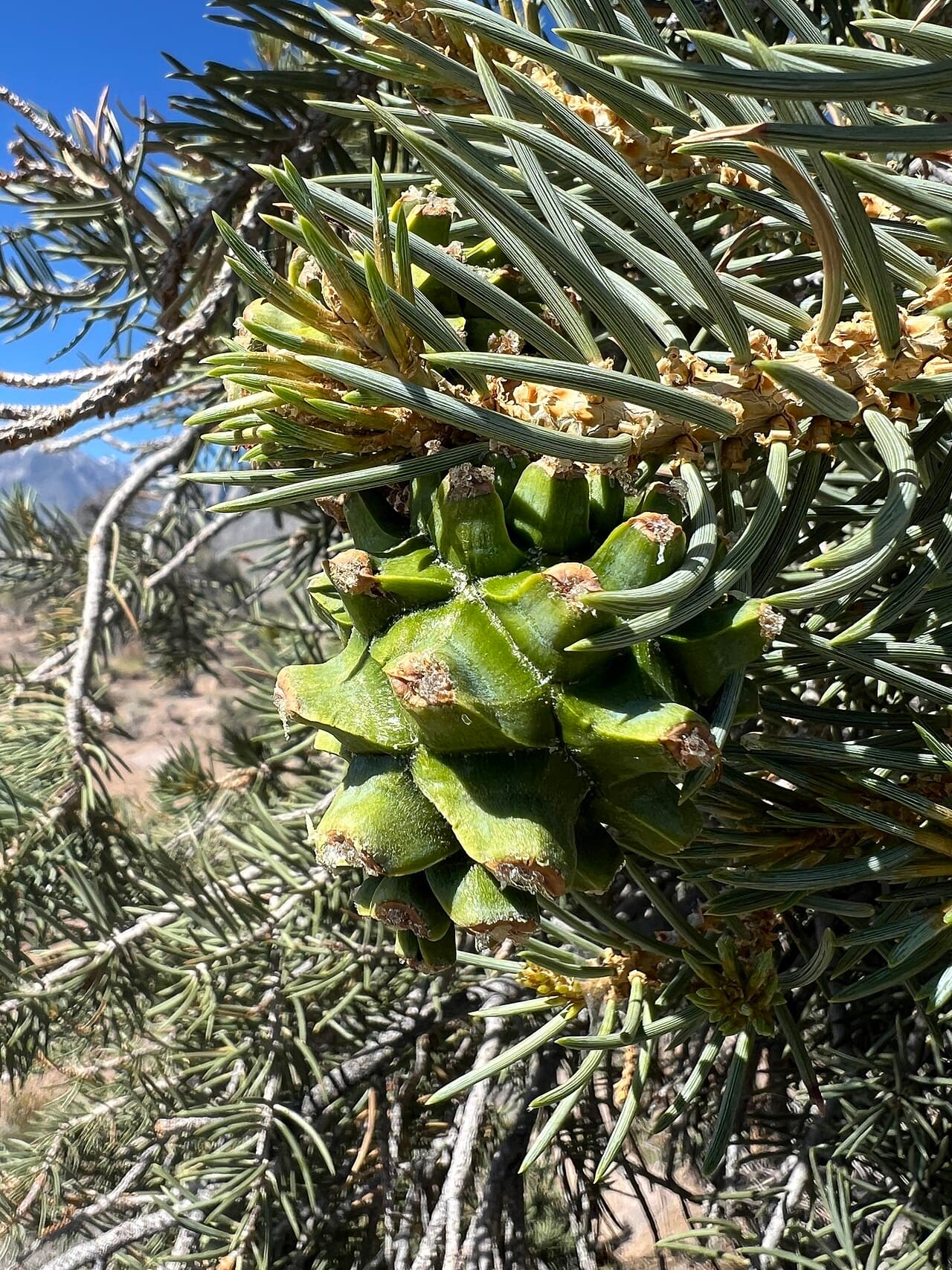
The crown is dense, gray-green, and scaly rather than needled like a pine. Bark sheds in strips. The “berries” are fleshy cones, blue to reddish under a waxy bloom, and birds move them. The smell of crushed foliage is sharper and more resinous than creosote’s rain scent. Pinyon pine, where the two grow together, has real needles in bundles and a more open, dark crown.
What the stand means
Juniper is a transition marker. When it replaces open creosote you have gained elevation, a bit more winter cold, and often rockier soil. That is also where winter storms sit longer and where fire, once started, can run through a tighter canopy than on the flats. Birds, including species that drop into the Joshua tree zone in cold snaps, use the cones and the cover.
Cutting firewood
A juniper on private land is still a slow desert tree. Topping it into a lollipop, or cutting it for a weekend fire pit, removes shade and slope cover that will not return on a garden timetable. Dead wood on the ground is lizard and insect cover. In the park and on most public land, collecting wood is prohibited. If you are clearing defensible space, follow the fire district’s current guidance and take the dead material first.