Basin wiki · Animals
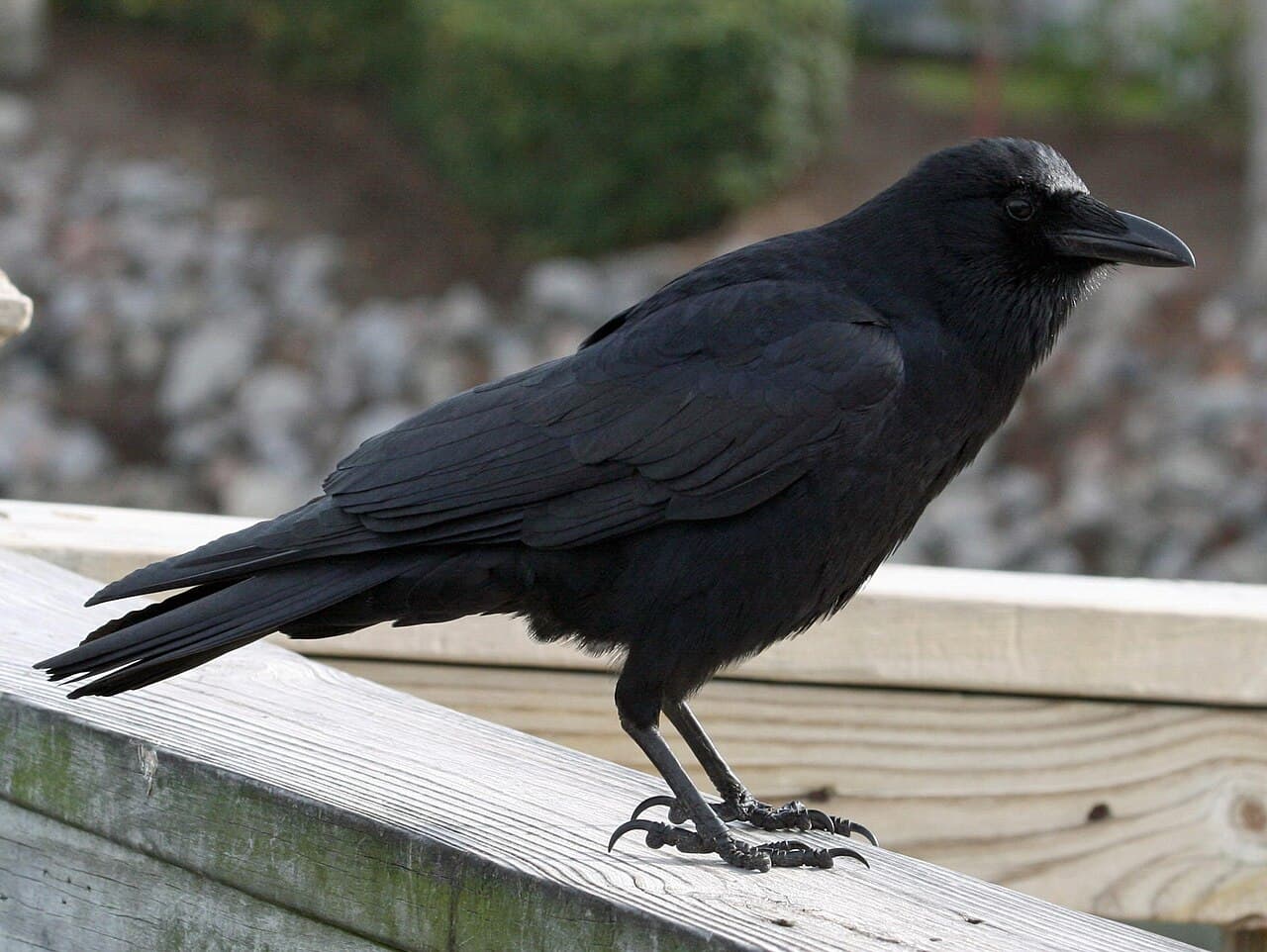
Common raven
Corvus corax
The big black bird on the power pole. Intelligent, increasing around people, and a real predator of young tortoises.
Where you'll see it
Ravens are year-round across the basin: dumpsters behind Yucca Valley shops, the landfill circuit, highway roadkill, ranch yards, and the park. The park’s tortoise account is blunt about why numbers climbed: more roads and roadkill, landfills, litter, and power poles that make perfect lookouts. A raven pair on a homestead water tank is normal. A crowd of them at a picnic table is a food lesson humans keep teaching.
How to tell it
Ravens are much larger than crows, with a heavier bill, a wedge-shaped tail, and a deep croak rather than a caw. In flight the tail reads as a diamond, not a fan. Crows do show up in towns; if you are unsure, size against a power pole insulator is a fair field test. Ravens walk with a confident strut and will flip a trash lid that a smaller bird cannot.
Tortoises and trash
Adult tortoises are armored. Hatchlings are not. The park identifies ravens as keen predators of young tortoises and asks people to deal with garbage so the birds are not subsidized inside desert habitat. The local version: close the dumpster, don’t leave a trash bag in the truck bed overnight, pick up picnic leftovers, and skip feeding “the crows” for fun. Roadkill dragged off the pavement is food; lingering to watch a raven feed in the lane is how the next animal becomes roadkill.
What not to invent
Ravens are protected under the Migratory Bird Treaty Act. Shooting one at the dump, knocking down a nest on a shop sign, or setting out poison is a federal problem, not a pest-control shortcut. If a pair is nesting on a building and creating a genuine safety issue, the route is the property owner plus a permitted wildlife agent, on the government’s timing, which is usually outside the nesting season. Harassment with a garden hose just moves a smart bird ten feet.