Basin wiki · Animals
Kangaroo rat
Dipodomys · Dipodomys merriami · Merriam's kangaroo rat
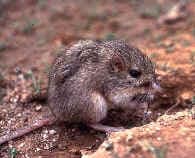
The night hopper that can live without a drink. On creosote flats here, Merriam’s is the one you usually mean.
Where you'll see it
Kangaroo rats are among the common small mammals of Joshua Tree National Park, and they are just as present on homestead flats in Wonder Valley, Landers, and Joshua Tree. You meet them in headlights: a small shape bounding on long hind feet across a dirt road, tail streaming. By day they are underground. Several Dipodomys species live in the California deserts. Merriam’s kangaroo rat is the widespread one on ordinary creosote soil; sandier sites can hold others. A photo of the hind foot and the tail tip is what a specialist needs to split them.
How to tell it
Huge hind legs, tiny forelegs, a long tail often with a tuft, and cheek pouches. The hop is the giveaway. A pocket mouse is smaller and scuttles. A pack rat (woodrat) is larger, slower, and the one building a stick mound in the garage or under a Joshua tree. Kangaroo rats do not want to be in the house; they want seeds and open ground.
Water they make themselves
The park’s mammal page explains the trick: extremely efficient kidneys, nasal passages that recapture moisture from breath, and metabolic water from dry seeds. They can live without ever drinking. That is why a water dish is not a kindness you owe them, and why a drained radiator is not their emergency. Seed caches in shallow burrows are the pantry. Leaving a sack of chicken scratch open is how you get a burrow under the coop.
Burrows, poison, and cars
Burrows aerate soil and feed kit foxes and snakes. Filling every hole on a five-acre lot is habitat removal, and anticoagulant bait meant for “mice” kills the foxes and owls that eat the rats. If they are chewing irrigation wire, hardware cloth and a tighter shed beat broadcast poison. On the road at night they freeze in headlights; slowing down on dirt sections saves more of them than any backyard project.