Basin wiki · Animals
Black-tailed jackrabbit
Lepus californicus
A hare, not a rabbit. Big ears, a black tail tip, and a habit of crossing roads at dusk.
Where you'll see it
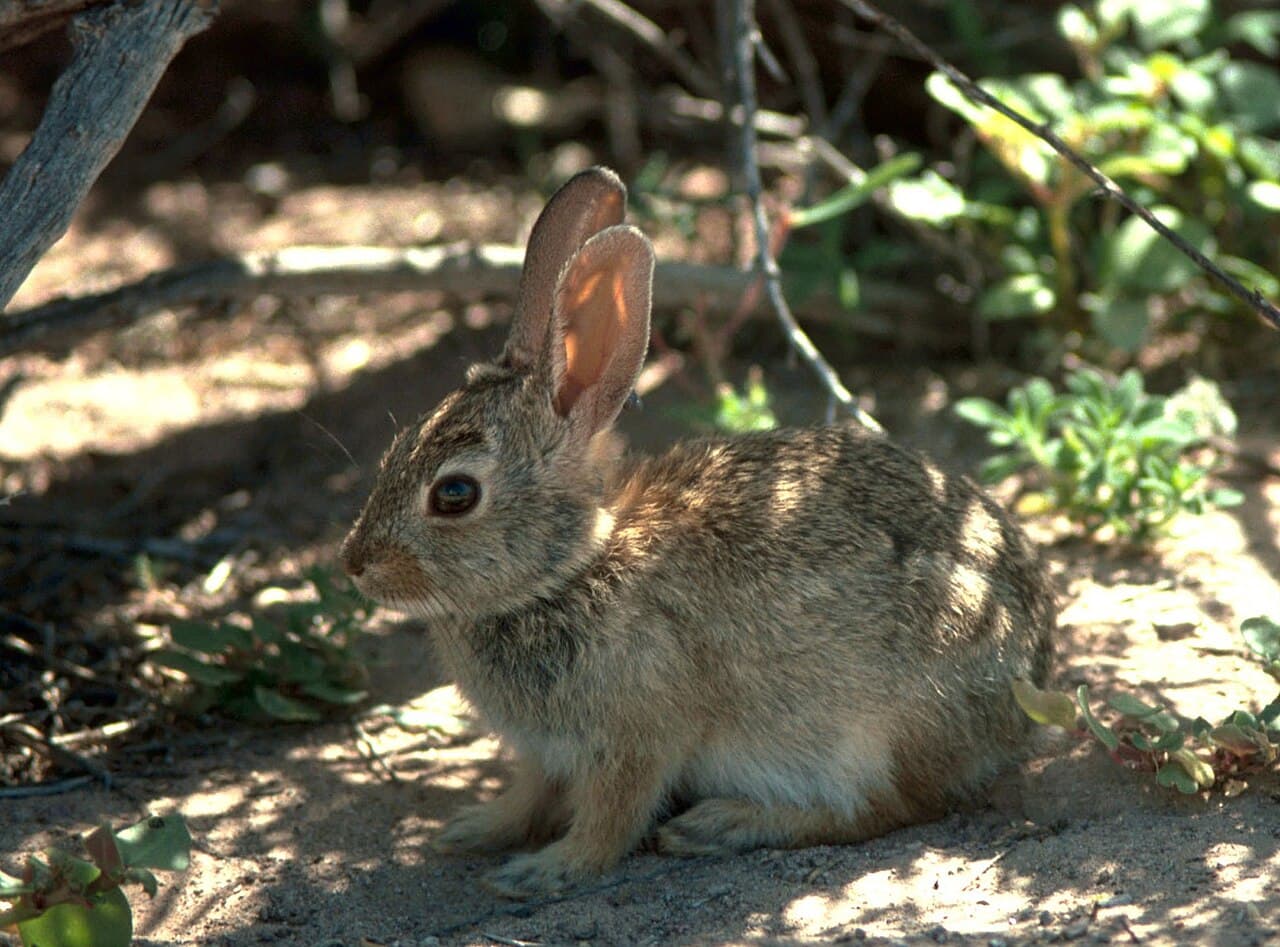
Black-tailed jackrabbits are common from town edges to open creosote across the basin. Dusk is the peak, which is also when commuters are on Highway 62 and on Old Woman Springs Road. Daytime, they sit in a shallow scrape under a shrub, ears up, and flush only when you are close. Desert cottontails share the yards and stay closer to cover; if the animal is large, long-eared, and bounding across an open pad, it is the jackrabbit.
How to tell it
The ears are huge, with pale edges, and they dump heat as well as catch sound. The tail is dark on top, which you see when it runs. The bounding gait is a series of long hops, not the cottontail’s shorter scoot into a bush. Young are born furred and mobile, which is the hare pattern. A “nest of bunnies” in a grass cup is more likely a cottontail, and it should be left alone; the mother is feeding on a schedule that looks like abandonment and isn’t.
Gardens and dogs
They eat shrubs, garden starts, and the vegetables people insist on growing in April. Chicken wire around a bed works better than a scarecrow, and it needs to be tall enough that a standing animal cannot browse over it. Dogs chase them into traffic and into fences. Coyotes and raptors are the ordinary predators, which is a reason not to poison the food chain over a row of beans.
Driving
They freeze, then dart. On 62 at sunset, especially near open lots in Joshua Tree and Yucca Valley, the useful habit is to expect one more animal after the one you saw. They are wildlife, not a game animal for the shoulder of a state highway. A jackrabbit that has been hit is also raven and coyote food; pulling fully off the pavement matters more than a roadside funeral.